Water has a quiet way of shaping daily life. You notice it when your morning tea tastes just right, when the shower feels comfortable, or when the dishes come out of the dishwasher without cloudy marks. And you notice it just as quickly when something changes. Maybe there’s an odd smell from the kitchen tap, a stubborn ring around the bathroom faucet, or a kettle that seems to collect mineral deposits every few weeks.
These problems can be frustrating, but they don’t automatically mean you need an expensive treatment system. The sensible first step is to understand what’s happening. Once you know the cause, it’s much easier to choose equipment that suits your household, your water source, and your budget.
Start With a Little Water Detective Work
Before looking at products, pay attention to the symptoms around your home. White scale on faucets may indicate hard water. Orange staining can sometimes point to iron, while a chlorine-like taste may suggest that certain filtration options are worth considering. A rotten-egg odor can have several causes, including hydrogen sulfide in the water or issues within the plumbing.
These observations are useful clues, not a complete diagnosis. Water can contain dissolved substances that aren’t visible, and clear water isn’t necessarily free of every contaminant. That’s why testing matters.
If your home uses municipal water, reviewing the supplier’s water-quality report is a sensible place to begin. If you rely on a private well, testing should be tailored to local conditions and possible risks. Depending on the situation, this may include hardness, pH, iron, nitrates, bacteria, or other substances.
The results help you avoid buying equipment based on assumptions. After all, a system designed to reduce mineral hardness won’t necessarily address a bacterial concern, and a basic taste filter isn’t a substitute for every type of treatment.
When Water Needs More Than Filtration
For homes that rely on private wells or have specific concerns about microorganisms, treatment may need to go beyond improving taste and appearance. One option sometimes considered is UV disinfection systems, which use ultraviolet light to inactivate susceptible microorganisms as water passes through the unit.
Unlike chemical disinfection, UV treatment doesn’t rely on adding a disinfectant to the water. However, the system must be selected and maintained correctly to deliver the intended performance. Water clarity is particularly important because suspended particles can shield microorganisms from the light. Depending on the source, prefiltration may therefore be necessary.
UV disinfection also has limits. It does not remove dissolved salts, heavy metals, hardness minerals, or sediment. Nor does it provide lasting protection against contamination that occurs later in the plumbing or storage system. If a well test identifies a microbiological problem, follow the advice of a qualified water professional or local health authority rather than installing a UV unit without assessing the full situation.
Routine maintenance matters, too. The lamp and associated components need attention according to the manufacturer’s instructions, and the system should be checked to confirm that it is operating as intended. A disinfection unit is useful only when its installation, water conditions, and upkeep support reliable performance.
Making Hard Water Less Troublesome
Hard water is a common source of household irritation. Calcium and magnesium can form deposits around showerheads, taps, kettles, and water heaters. Soap may lather less effectively, and glassware can emerge from washing with spots that seem impossible to remove completely.
For households dealing with these issues, water softeners may be a practical option. Traditional ion-exchange models reduce hardness by replacing calcium and magnesium ions with other ions, commonly sodium. This can help limit scale formation and make cleaning easier.
Softening isn’t the same as general purification, though. A conventional softener is designed primarily to address hardness; it doesn’t automatically remove bacteria, pesticides, or every dissolved contaminant. If the water has several different issues, additional treatment may be needed based on the test results.
Before choosing a softener, consider household size, water hardness, daily usage, and available installation space. An undersized system may regenerate too frequently, while a unit that’s larger than necessary can add avoidable expense. Traditional models also require salt replenishment and periodic checks.
Some homeowners have concerns about sodium in softened water, particularly when drinking-water needs require special consideration. Discuss those circumstances with a qualified professional and decide whether a separate drinking-water line or another arrangement makes sense for your home.
Improving Taste and Odor at the Tap
Sometimes the main complaint is simpler: the water tastes unpleasant, smells strongly of chlorine, or makes coffee and tea less enjoyable. In those cases, a filter designed for the specific concern may be sufficient.
Carbon filtration systems use activated carbon to adsorb certain substances onto the material’s porous surface. Depending on the design and certification, they can reduce chlorine taste and odor and selected organic compounds. They are available in pitcher filters, faucet-mounted units, under-sink models, and whole-house configurations.
The important detail is what a particular filter has actually been tested to reduce. Two products containing carbon may perform differently because of their media, contact time, flow rate, and overall design. Don’t assume that a filter removes lead, microorganisms, or other contaminants unless its documentation supports that claim.
Think about where you want the water treated. A small under-sink filter may be convenient if drinking and cooking are your main priorities. Whole-house treatment could be worth exploring when a specific issue affects several fixtures, although the equipment needs to be selected for the intended purpose.
Cartridge replacement is another consideration. Carbon media gradually becomes exhausted, and performance can decline if the filter is left in service beyond its recommended life. Check replacement intervals and costs before buying; a system that is easy to maintain is more likely to receive the attention it needs.
Combining Treatment Methods Without Overcomplicating Things
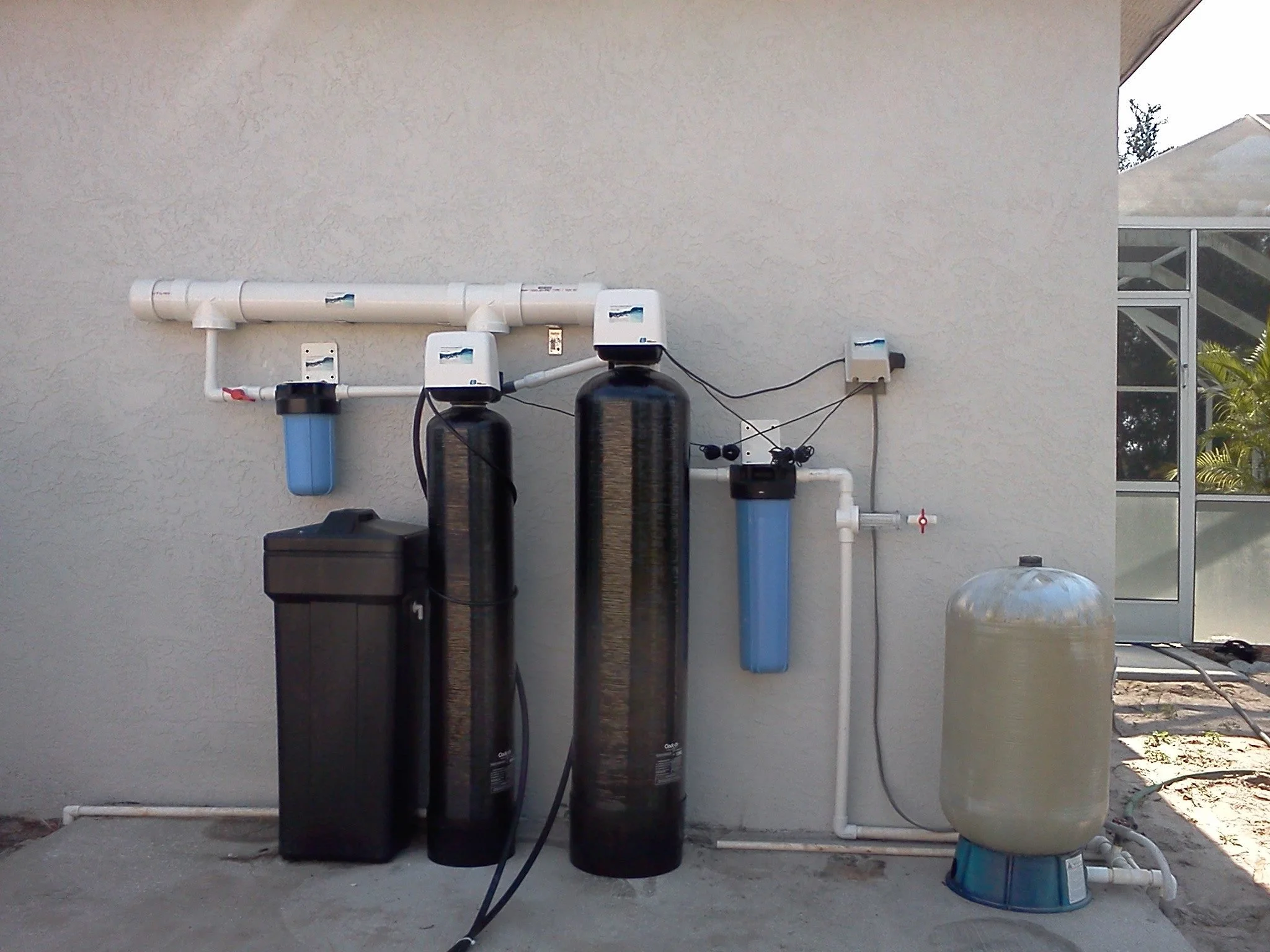
Some households have more than one water-quality concern. A private well, for example, may have hardness minerals as well as a microbiological risk. In that situation, a softener alone would not address the entire problem, while a UV unit would not remove hardness.
A combination of treatment methods may be appropriate, but the order and design matter. Sediment removal may be needed before certain treatment stages, and equipment must be sized for the home’s water demand. The right arrangement depends on test results, manufacturer requirements, and the plumbing system.
Ask providers to explain why each component is being recommended. If a proposal includes several filters, request a clear explanation of what each one does. More equipment doesn’t automatically mean better water, and unnecessary components add installation and maintenance costs.
Don’t Forget the Long-Term Care
Every treatment system needs some level of upkeep. Filters and cartridges require replacement, softeners need routine attention, and UV equipment requires checks according to the manufacturer’s schedule. Keep records of servicing and water-test results, and investigate sudden changes in taste, odor, color, or pressure.
The goal isn’t to make water treatment another complicated household chore. It’s to build a system that addresses the actual problem and remains manageable over time.
Make the Choice With Confidence
Better water starts with good information, not a sales pitch. Identify what concerns you, test where appropriate, and compare equipment based on verified performance, installation requirements, and long-term costs.
The right setup may be a simple drinking-water filter, a softener, a disinfection system, or a carefully selected combination. What matters is that it fits your water conditions and household needs. With sensible planning and regular maintenance, water treatment can become a straightforward part of caring for your home rather than a problem you keep trying to solve.